


Trolling Spoon Flutter
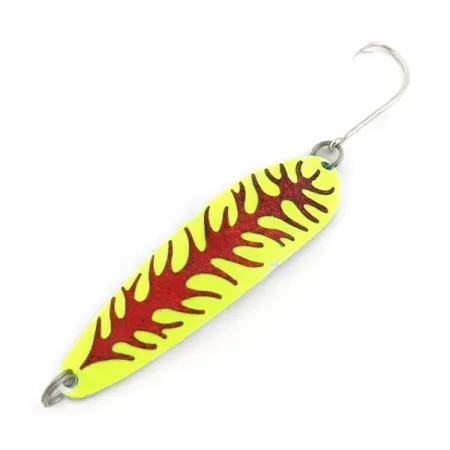
The Trolling Spoon Flutter collection represents a specialized class of metal lures designed specifically for towing behind a boat. These slim, elongated spoons differ significantly from traditional casting models in both construction and hydrodynamic properties. Crafted from thin sheet metal—typically brass, copper, or stainless steel with a thickness ranging from 0.8 to 1.2 mm—they feature a length of 100 to 140 mm and a width of 10 to 18 mm. Despite their profile, they generally weigh no more than 10 to 15 grams. This precise ratio of surface area to weight ensures minimal frontal resistance, allowing the spoon to perform high-frequency rolling vibrations around its longitudinal axis with a wide amplitude, avoiding spinning out of control as long as the speed is regulated.
Achieving the correct depth requires the integration of specialized diving equipment due to the lightweight nature of these spoons. Because they cannot reach deeper working horizons on their own, anglers rely on additional tools. Downriggers utilize heavy weights on steel cables equipped with line release clips to maintain the lure at fixed depths from 5 to over 30 meters. Alternatively, Dipsy Divers use adjustable eccentric disks that leverage water resistance to dive while simultaneously pulling the lure away from the boat's wake. For quick adjustments, in-line sinkers can be attached directly to the main line a few meters ahead of the leader.
Optimal presentation of these slim spoons depends heavily on maintaining a precise speed range and setback distance. The effective working speed typically spans from 3.2 to 4.5 km/h; dropping below 3 km/h dampens the rolling action, while exceeding 5 km/h introduces the risk of the lure entering a chaotic spin. Spoons are set back 20 to 40 meters behind the diving device or downrigger clip on a fluorocarbon or monofilament leader. Navigating the boat in a zigzag pattern alters the action: lures on the inside turn slow down and flutter downward, while those on the outside turn accelerate, creating a rhythmic change that can trigger strikes from passive predators.
The physical profile and vibration of these lures effectively mimic pelagic forage species such as vendace, smelt, bleak, or sand eel. Salmon and sea trout serve as primary targets, particularly in the upper and middle water layers of open lakes and marine waters. During summer, zander are targeted near thermoclines or at night, showing a preference for spoons with UV or fluorescent elements. Large pelagic pike are attracted to the strong flashes generated by the thin metal, which they detect via vision and lateral line. Furthermore, smaller modifications measuring 70 to 90 mm can be utilized in deeper bottom layers of 6 to 10 meters to target large perch.
There are no products to list in this category