Dominion Tackle — Canadian Vintage Metal Lures

The history of Dominion Tackle Co. began in 1925 in the east end of Toronto. Founded by Owen A. Jones, a recognized figure among Toronto anglers, the business originally operated from a storefront at 2107 Danforth Avenue. While the initial scale was modest, the company eventually expanded its reach, later becoming known as Dominion Fishing Tackle Manufacturers and functioning as a division of Owen’s Enterprises. The manufacturing operations eventually transitioned to Oro Station, Ontario, after the company was acquired by Lester Bedford. Bedford, alongside his son Douglas, maintained the business for thirty-three years.
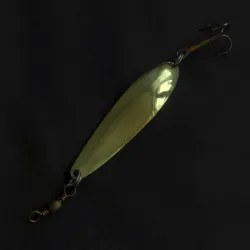
Metal craftsmanship defined the manufacturer's output, with a focus on spoons, spinners, and ice fishing decoys. The company's contributions to the decoy field were documented by expert Joe Fossey, who noted the creative adaptations necessitated by metal shortages during World War Two. These decoys utilized internal weights and top-mounted hooks for suspension. Some specimens were highly elaborate, reflecting the striving for perfected finish and flotation during that era.
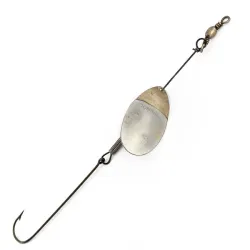
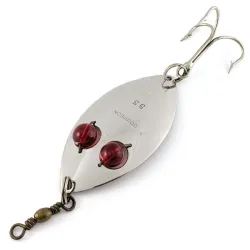
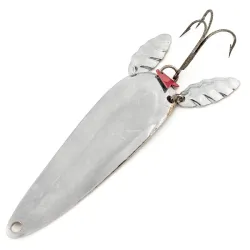
Among other offerings, the catalog included a variety of specialized metal baits designed for both casting and trolling. The assortment featured the "Beetle Wing" and the "June Bug Spinner," the latter of which incorporated an elongated axis intended for use with live bait. Spoon models included the "Red Eye Wiggler," "Kidney Bait," "Devil Bait," and the "Sail Fish," which was distinguished by imitation eyes along the length of its body. Other series, such as the "Leopard and Gold Bowl," utilized perforated or textured elements to influence light reflection and hydroacoustic effects. Many of these spinning lures were attributed to a designer known as Owen, who brought twenty-five years of experience to the brand.
A signature element of many Dominion designs was the "Red Eye" system. This involved the integration of red glass or plastic beads onto the lure body or axis to simulate the eyes of prey. The lures were typically constructed from polished copper, nickel, or brass, with some versions featuring enamel finishes such as the red-and-white pattern or the "leopard" motif with black spots on a yellow background. Treble hooks were frequently dressed with red and white feathers or wool windings.
Technical identification was facilitated through a numerical system stamped onto the metal blades or printed on the packaging. Model indices included numbers such as 37, 52, 55, and 275. Specific series like the "Kidney Bait" followed an internal sizing convention, such as №11, №12, and №13, which corresponded to blade lengths from 1½ to 2½ inches and hook sizes ranging from 1/0 to 5/0. Packaging evolved from simple cardboard backing where lures were fastened with wire or staples to blister packs and perforated display cards designed for retail distribution.