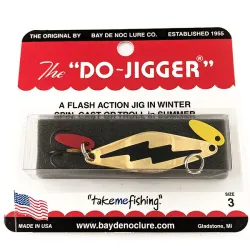
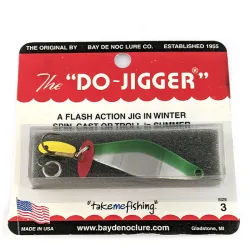
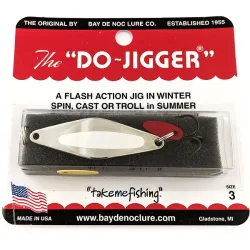
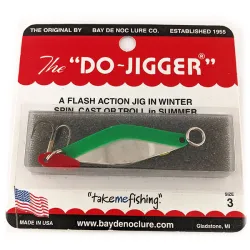
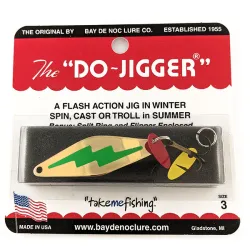
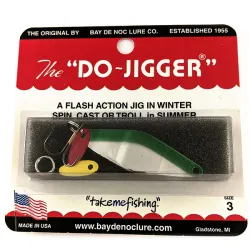
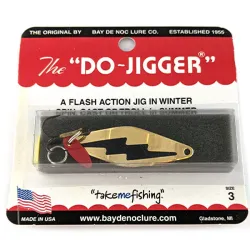
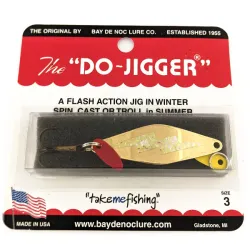
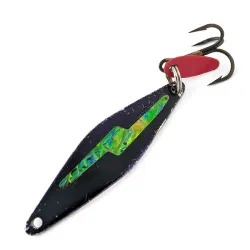
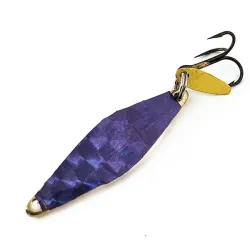
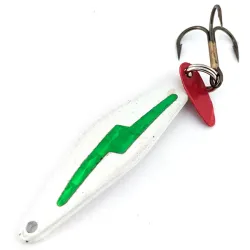
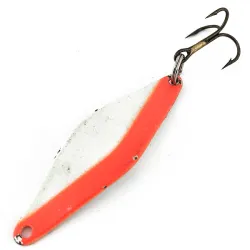
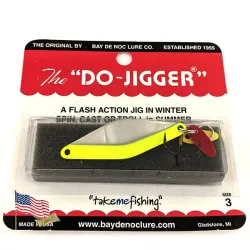
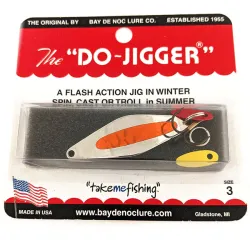
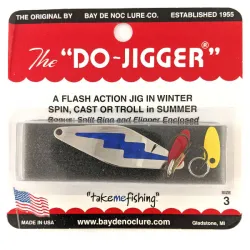
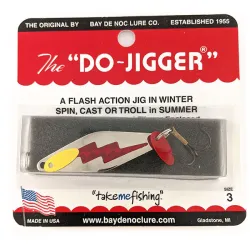
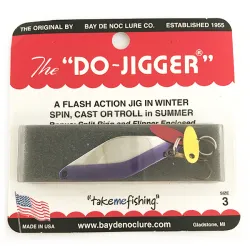
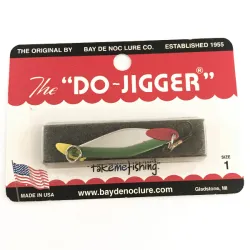
Bay de Noc Do-Jigger
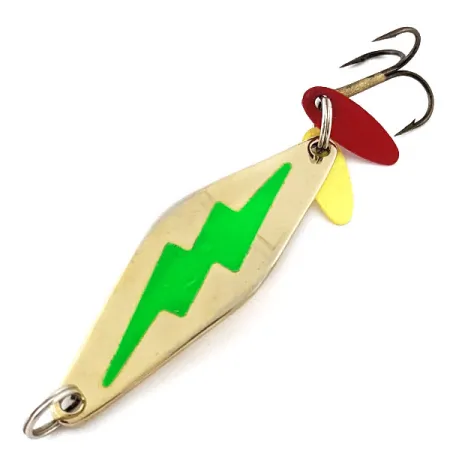
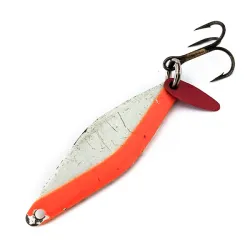
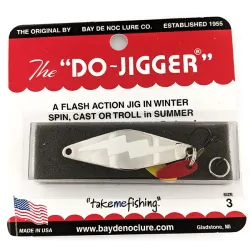
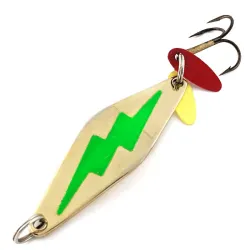
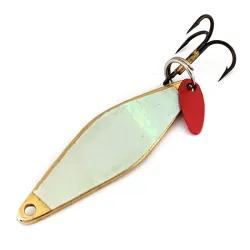
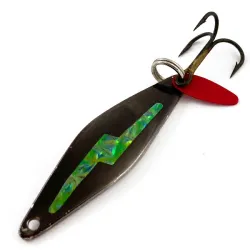
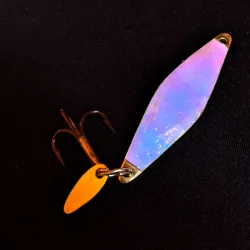
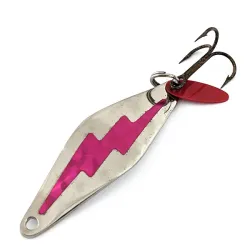
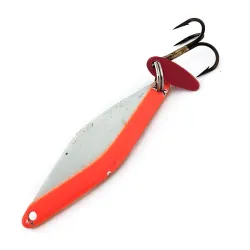
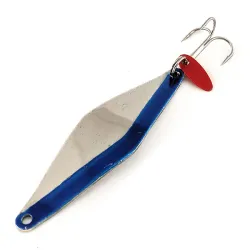
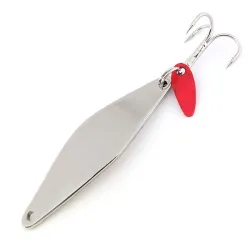
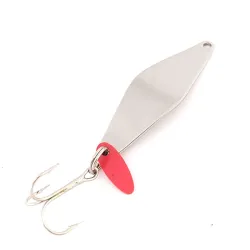
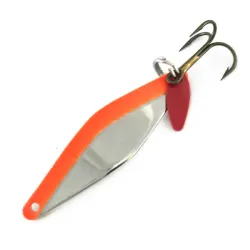
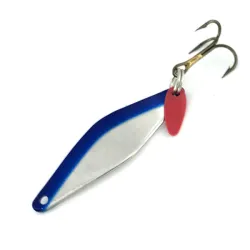
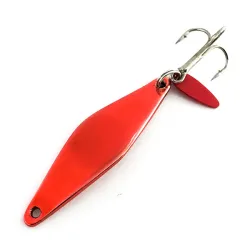
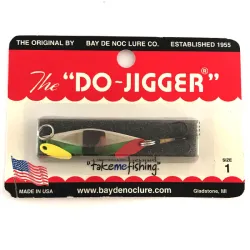
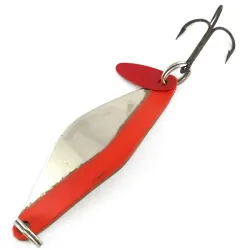
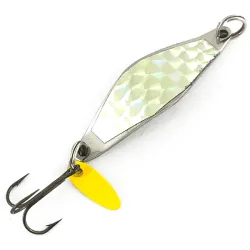
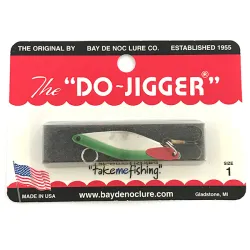
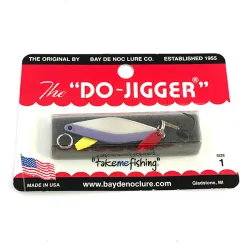
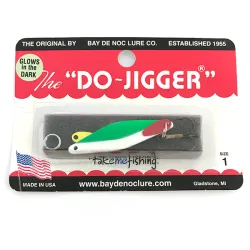
The Bay de Noc Do-Jigger, hailing from Gladstone, Michigan, remains one of the most enduring designs from the family-owned Bay de Noc Lure Co. Developed in 1957 by Eddie Appel and his partners—the creators of the renowned Swedish Pimple—this spoon was introduced to provide a distinct "planing" action. While its predecessor was known for a fast, vertical descent, the Do-Jigger was engineered with a more pronounced curved profile. This design allows the lure to swim away from the vertical axis during the drop, closely mimicking the erratic movements of a wounded baitfish.
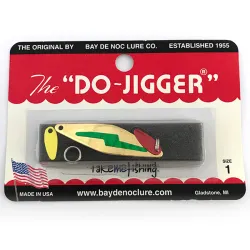
The lure is produced in three primary weight classes to accommodate different depths and target species. The #1 model, weighing 1/8 oz, is a consistent bestseller frequently employed in waters up to 20 feet deep for targeting small perch and trout. For mid-range applications or deeper scenarios, the #3 (1/3 oz) serves as a universal size. The heaviest in the lineup, the #5 (1/2 oz), is intended for deep-water presentations and larger predators such as walleye and lake trout.
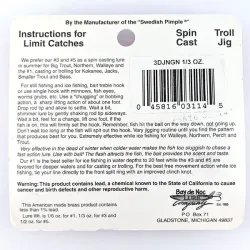
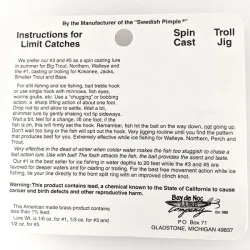
Effective vertical jigging with the Do-Jigger requires a methodical sequence of movement and pauses. The standard approach involves a sharp lift of approximately one foot, followed by lowering the rod tip to allow the spoon to settle and plane outward. After the descent, a subtle sideways quiver of the rod tip can trigger strikes from trailing fish. In the depths of winter, when cold water makes fish too lethargic to chase fast-moving hardware, this planing action is particularly effective. Anglers often experiment with jigging patterns until the right rhythm is found, as fish may tentatively inhale the lure rather than strike aggressively.
Rigging the Do-Jigger correctly is essential for maintaining its intended swimming motion. For maximum freedom of movement, the line should be tied directly to the front split ring using an improved clinch knot, or used in conjunction with a round-eye swivel. While the lure’s flash serves as the primary visual attractant, adding bait—such as minnows, fish eyes, worms, or larvae—provides the necessary scent and taste. For specific applications like casting or trolling for kokanee and jack, a specialized large-ringed single hook is often substituted for the standard treble.
Though primarily recognized for its performance under the ice, the Do-Jigger is a versatile tool for open-water casting. It exhibits an active swimming action at medium retrieval speeds, making it effective for northern pike, walleye, and trout. The design incorporates over 50 years of manufacturing experience and insights gained from both North American and Scandinavian fishing traditions, focusing on the specific requirements of vertical jigging and cold-water environments.