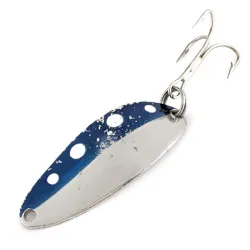
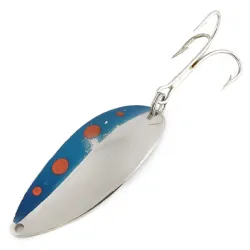
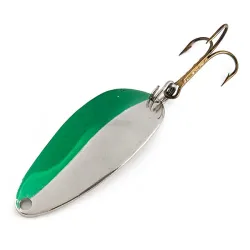
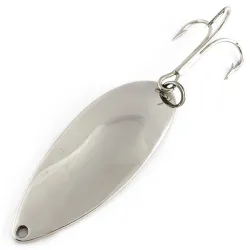
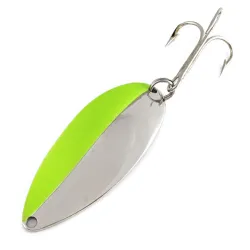
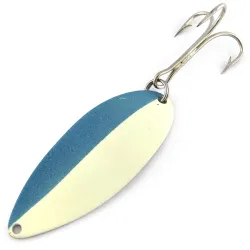
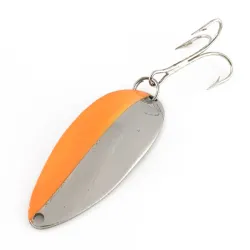
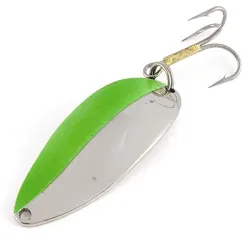
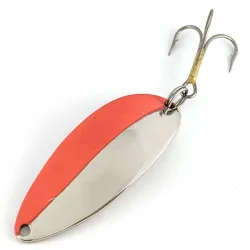
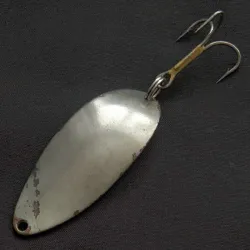
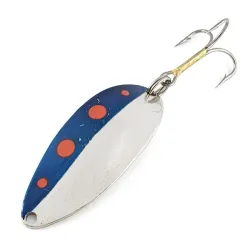
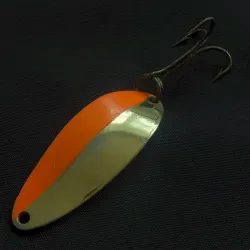
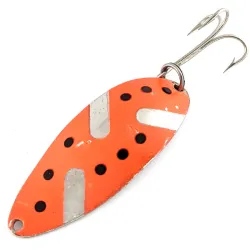
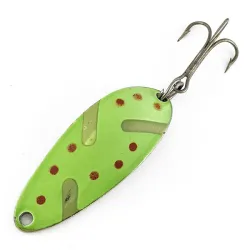
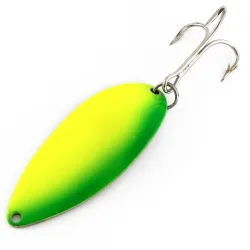
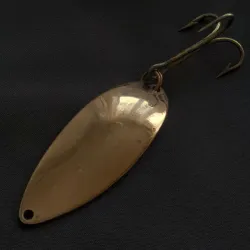
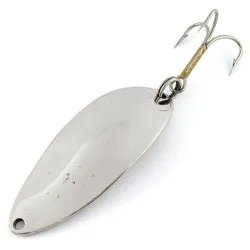
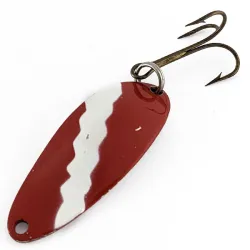
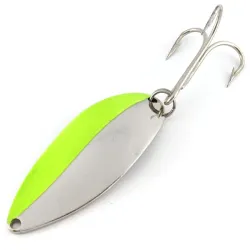
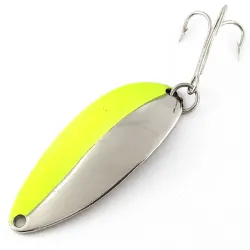
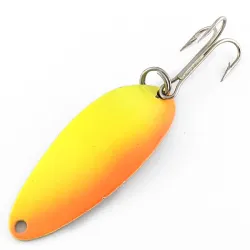
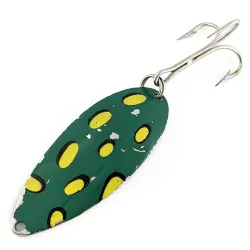
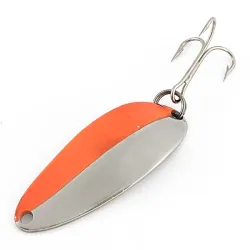
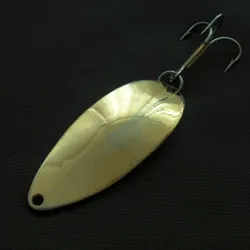
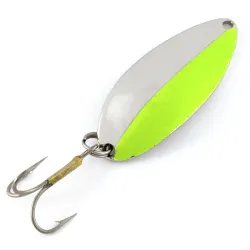
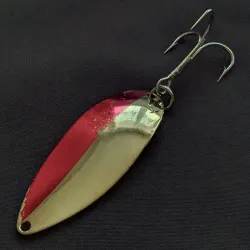
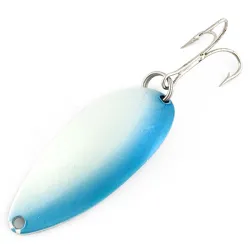
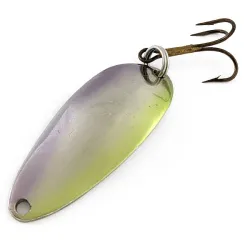
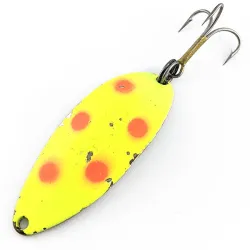
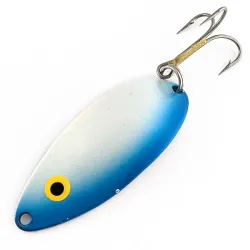
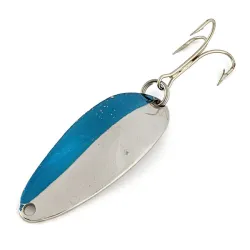
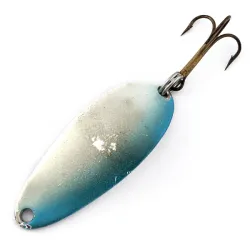
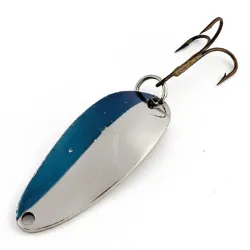
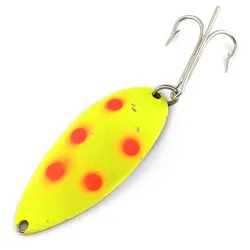
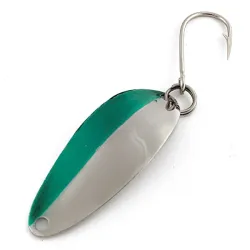
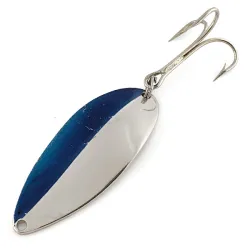
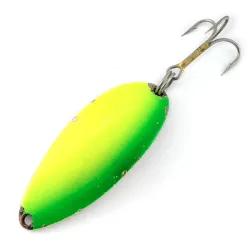
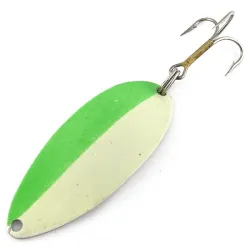
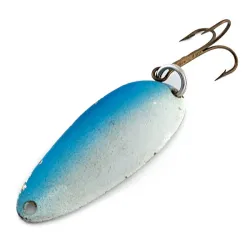
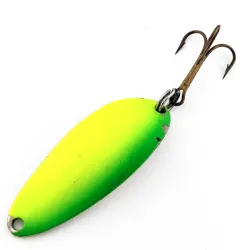
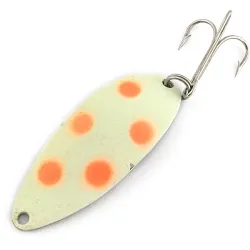
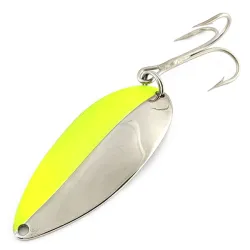
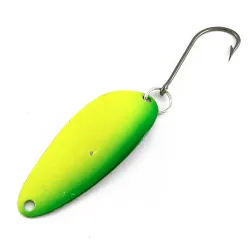
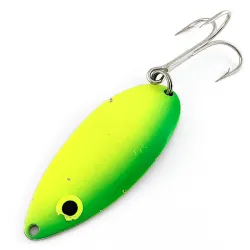
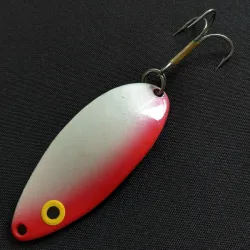
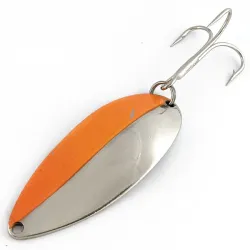
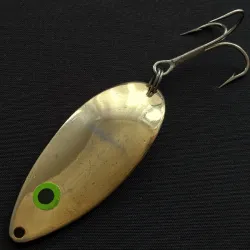
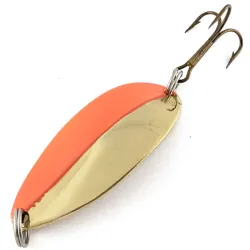
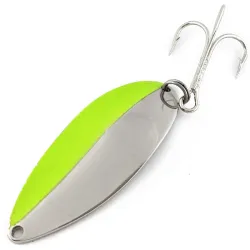
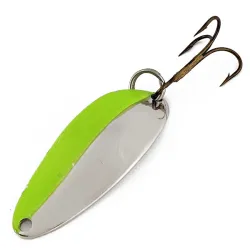
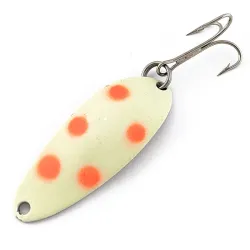
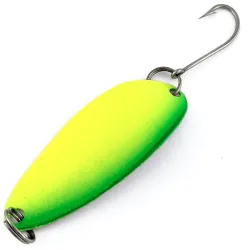
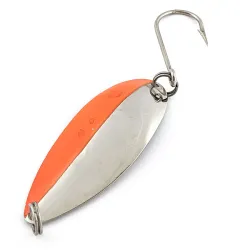
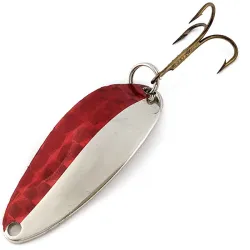
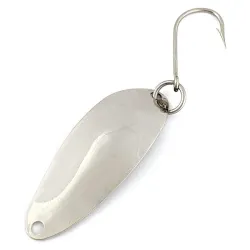
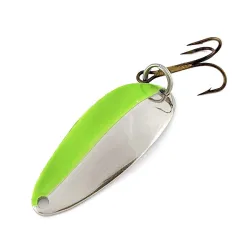
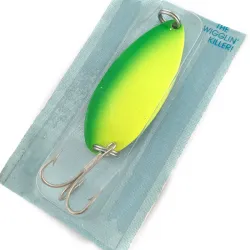
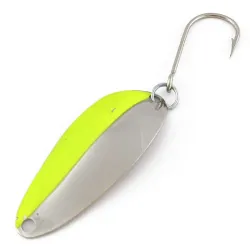
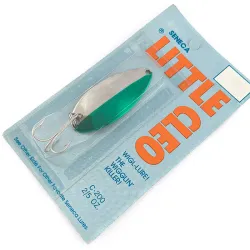
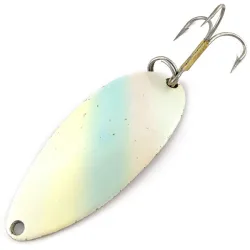
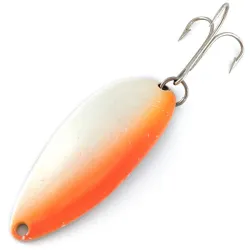
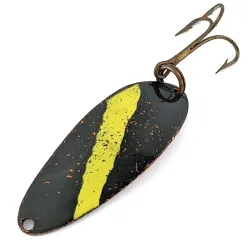
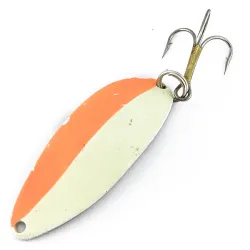
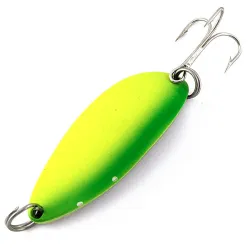
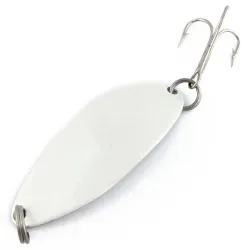
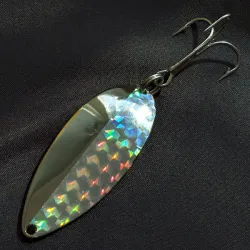
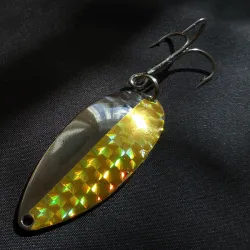
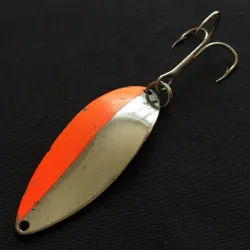
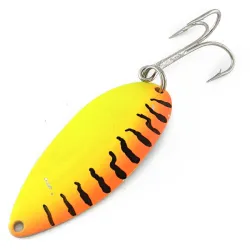
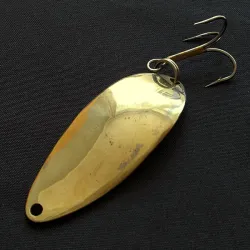
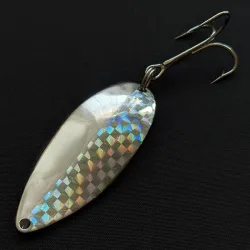
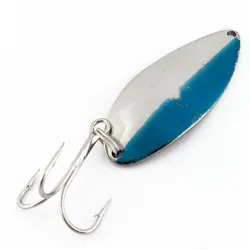
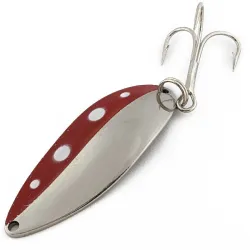
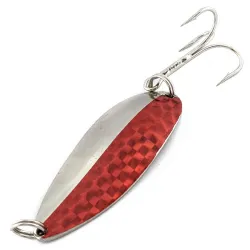
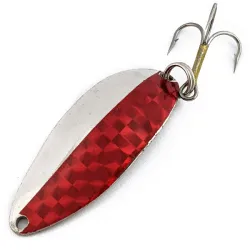
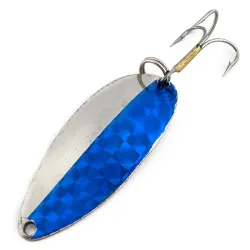
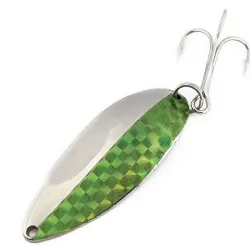
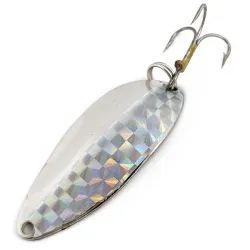
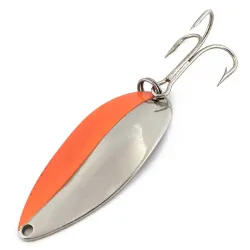
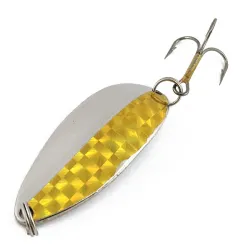
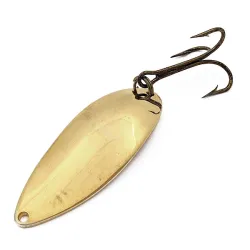
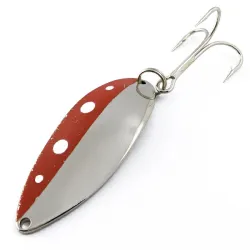
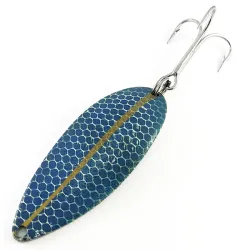
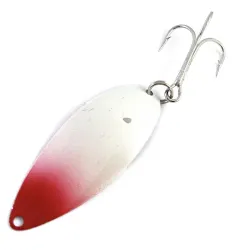
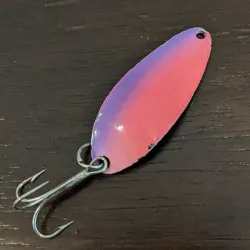
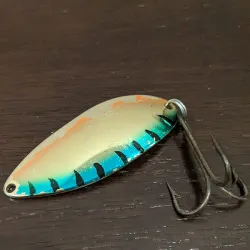
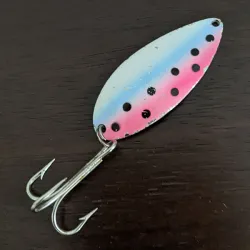
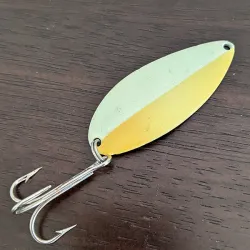
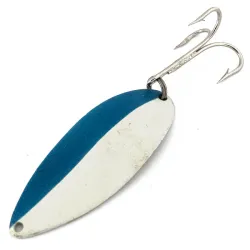
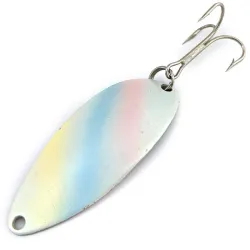
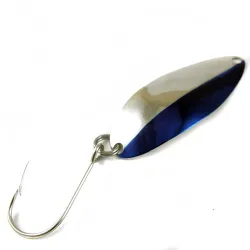
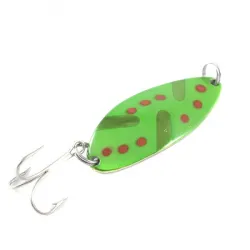
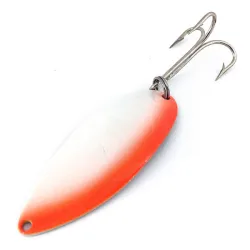
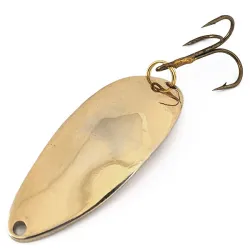
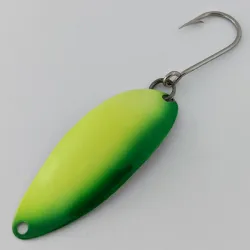
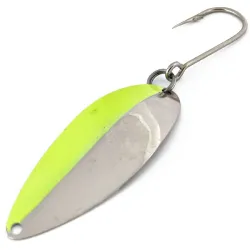
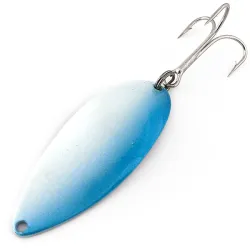
Little Cleo with the Hula Girl stamp
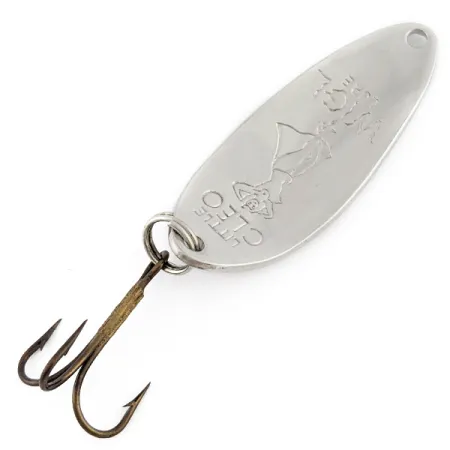
Little Cleo Hula Girl — origin and early history. First commercial mention of the Little Cleo dates to February 1, 1953, when the company Seneca, founded in 1951, released it. The founder, musician and songwriter Charlie Clark, drew inspiration from a 1930s exotic dancer named Cleo, intending the lure's motion to mesmerize predators much as the dancer had mesmerized him. The design received an official trademark in 1962. In the early 1980s Acme acquired Seneca; production continued, but the original engraving of the Hula Girl on the metal disappeared. Veteran American anglers still hold that the dancer engraving brought luck on the water.
Design and intended quarry. The Little Cleo's defining structural feature is a pronounced bend in the tail section. That curve provides stability in current and produces an ample, rolling action that provokes predatory strikes. While it was initially profiled for salmon, trout and steelhead, in practice the spoon behaves as a versatile tool and works reliably on pike, large perch, asp and zander.
Stop-and-Go (play on the fall). The most productive retrieve is stop-and-go. On a steady retrieve the spoon moves in wide gybes, but the bulk of strikes occur on the pause. When the angler stops the reel Little Cleo does not drop like a stone; it 'spills'—planing and rolling from side to side. Optimal pauses are about 2–4 seconds, varying with the fishing horizon.
Ragged rhythm. Alternating fast retrieves with strong slowdowns makes the lure behave differently at each speed: at speed it prowls chaotically, at very slow it swings wide and lazily. Interrupting the rhythm quickly unsettles passive fish and can provoke a reaction strike.
Trolling. When trolled, boat speed must be chosen carefully. The spoon should play with a wide amplitude but must not tear into a corkscrew. It is important to monitor its action visually at the transom before letting line out to the desired length.
Attachment and hook notes. Do not tie the lure directly with a fixed knot through the eye; a rigid attachment distorts its geometry. Use a snap with a wide bend or a split ring. In snaggy water replace the factory treble with a large single hook with a wide eye—reducing weight and resistance in the tail section increases the lure's sweeping action and improves passage through cover.
Colour choices. Silver with a blue or green stripe is the baseline for clear water. Gold, copper and fluorescent patterns, such as firetiger, are employed in poor visibility, peaty water or at dusk.